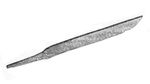
See our Langseaxes page for more information about this weapon.
Introduction to the British finds
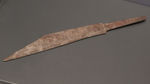
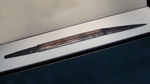
The following langseax information is primarily based on the work of Vera Evison (EVISON 1964) and her comparison of the Keen Edge Ferry langseax to others found in Britain. For the purposes of clarification langeaxes are defined here as having single edged blades with a cutting edge of over 12" and with no hilt fittings.
Period: 9th to early C10th. From a hoard which included a sword of Petersen type L. Hence the date line
Total Length: Complete. 71.3cm
Blade: Approx. 24". Heavily corroded with only the back of the blade surviving. One one side 2 channels and a third groove inlaid with a chevroned strip of copper and copper alloy (bronze) wire parallel to edge. Wilson argues that the two empty channels probably once contained similar inlay. The more corroded reverse side way probably the same.
Hilt: traces of wood survive on the possibly intact tang.
We have found the following langseaxs refereed to online with people quoting 'The Metallography of Early Ferrous Edge Tools & Edged Weapons' by R.F. Tylecote & B.J.J.Gilmour. Unfortunately we do not have access to this book and so are unable to determine if they were originally decorated with inlay.
England, Gloustershire at Kempsford
Current Location-
Find Type- ? 9-10th Century
Find Date- ?
Total Length- Complete. 78cm x 4.2cm. The spine is 8mm thick.